
Tojiro
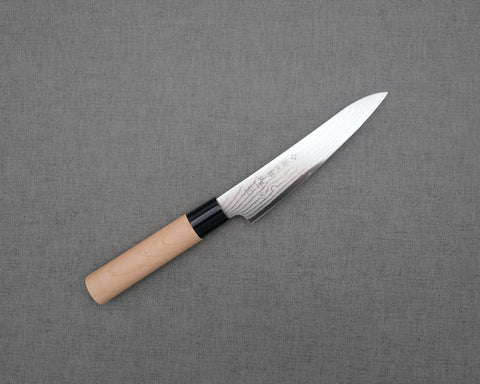
Tojiro "OURAN" VG10 Damascus 130mm Petty with Cherry Wood Handle
價格:
$2,253.00
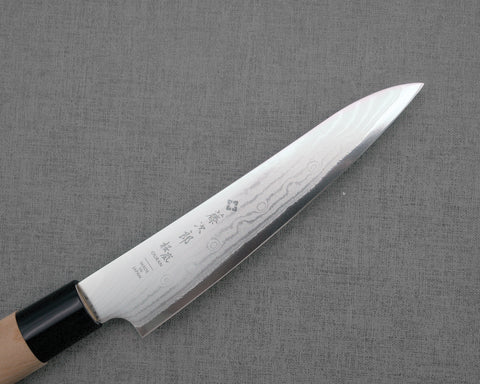
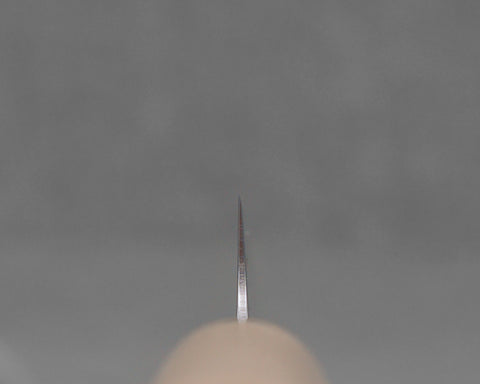
The Tojiro OURAN (桜嵐) 130mm Petty has a narrow point for jobs where it helps to see exactly where the edge will land. It can follow the curve around a strawberry hull, slip under the membrane of a citrus segment or trim the root from a shallot. There is still enough edge to take that shallot to the board and slice it.
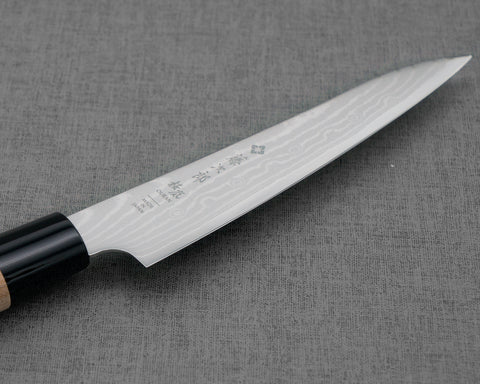
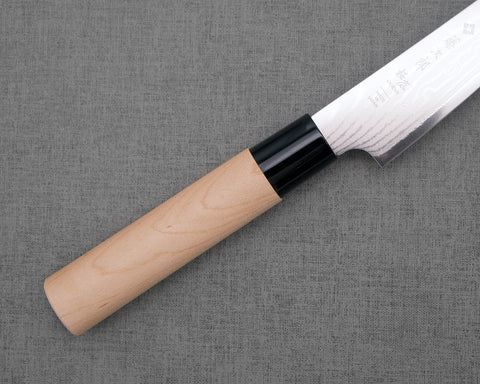
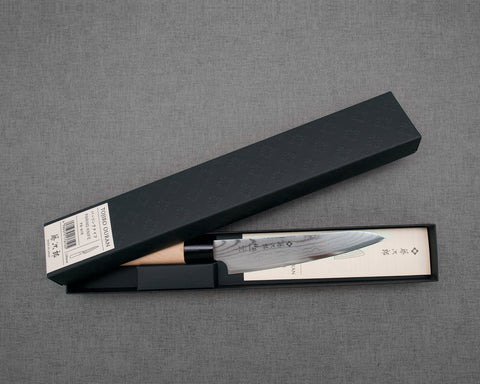
The blade shows fine waves of stainless Damascus above a VG10 cutting edge. Its double bevel suits either hand. Behind the black resin ferrule, the oval cherry wood handle has a warm grain of its own: Tojiro chose cherry for this series to evoke blossoms scattered by the wind.
Spec:
- Origin (Made in): Tsubame, Niigata Prefecture, Japan
- Brand: Tojiro
- Series: OURAN
- Model No.: FD-610
- Knife Type: Petty
- Blade
- Construction: San Mai
- Grind: Double bevel, 50/50
- Hagane (Core Steel): VG10 stainless steel
- Jigane (Cladding): Alternating low- and high-carbon stainless steels
- Hardness: 60–61 HRC
- Blade Finishes
- Damascus (layered pattern)
- Blade Length (nominal): 130mm (5.1")
- Blade Height (at heel): 28mm
- Spine Thickness
- Above heel: 1.8mm
- Middle: 1.4mm
- 1cm from tip: 0.5mm
- Handle
- Shape: Marugata (oval)
- Material: Cherry wood
- Kuchiwa (Ferrule): Black polypropylene resin
- Length: 110mm
- Overall Length: 250mm
- Knife Weight (without packaging): approx. 54g (1.90oz)
- Blade Mark: Printed 藤次郎 桜嵐 Ouran / Made in Japan
About Tojiro 藤次郎
Tojiro is one of the best-known knife manufacturers from Tsubame-Sanjo, Japan, combining modern production methods with traditional Japanese knife-making sensibilities. Their knives are known for strong value, consistent quality, and approachable stainless steel performance.
Care:
Wash and dry with a soft sponge, and safely store after use. Avoid cutting into bones, frozen foods, hard fruit pits.
Cutting Surface:
Recommended cutting surface: wood, rubberized boards and high-end composites, and quality plastics such as polyethene make acceptable cutting surfaces, and will help protect and prolong knife’s edge. AVOID glass, metal, countertops, and other rigid, non-forgiving surfaces.
Sharpening:
We recommend sharpening all quality Japanese knives on whetstones, as we believe they yield the best results for your knives.