
Masakage
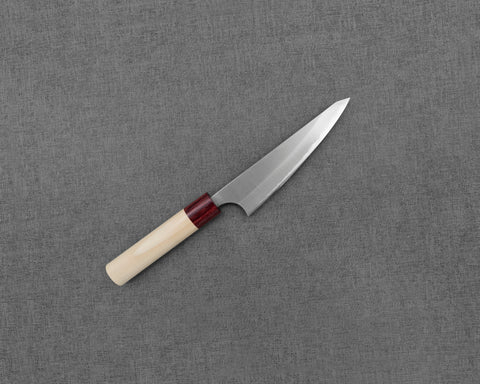
Masakage "Yuki" Shirogami #2 Nashiji 150mm Honesuki
價格:
$7,182.00
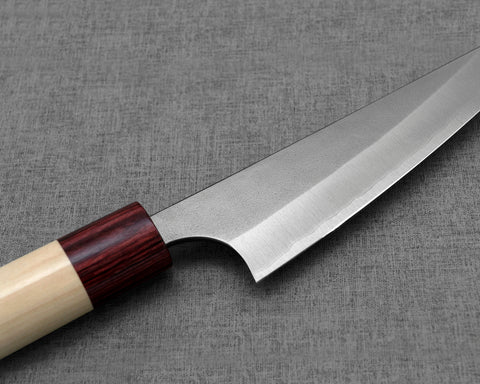
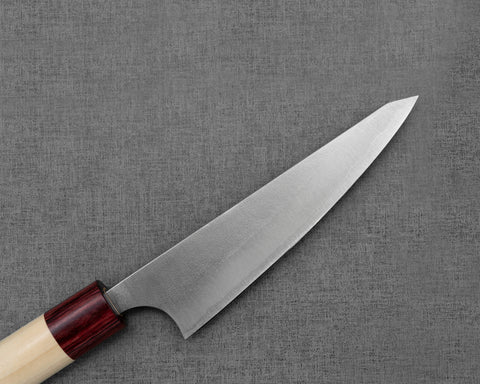
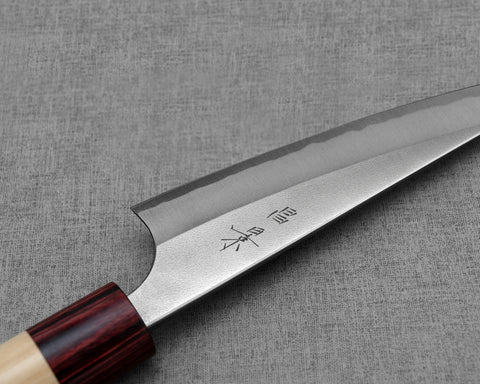
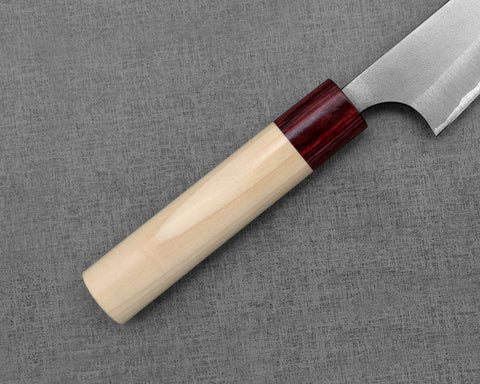
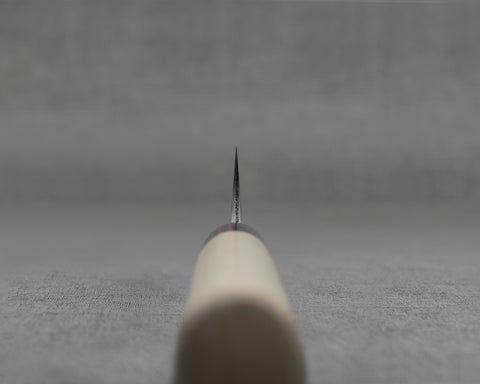
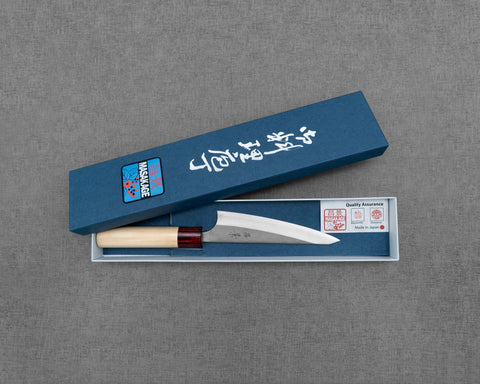
The Masakage Yuki Honesuki brings the series' approachable rustic character to poultry and light butchery. Yoshimi Kato's Shirogami #2 core takes a keen edge quickly, while stainless cladding reduces the amount of reactive steel that needs immediate attention. The 150mm triangular profile offers control around joints, skin, and connective tissue, yet its double-bevel geometry remains comfortable for either hand. A nashiji surface gives the blade a soft, frosted texture, balanced by a light magnolia handle and red pakkawood ferrule. Compared with a general-purpose petty, the Honesuki feels more authoritative at the heel and more precise at the tip. It is designed for working around bones, not striking through them, and rewards careful technique with excellent feedback.
Spec:
- Origin (Made in): Echizen, Fukui Prefecture, Japan
- Brand: Masakage
- Craftsman: Yoshimi Kato
- Sharpener: Takayuki Shibata
- Knife Type: Honesuki
- Blade
- Construction: San Mai
- Grind: Double-edged Blade (50/50 Grind)
- Hagane (Core Steel): Shirogami #2 (White #2)
- Jigane (Cladding): Stainless Steel
- Hardness: 62-63 HRC
- Hand-forged, hand-ground, hand-sharpened
- Blade Finishes
- Nashiji
- Blade Length: 150mm (5.9")
- Blade Height (at heel): 40mm
- Spine Thickness
- Above heel: 4.0mm
- Middle: 2.9mm
- Handle
- Shape: Marugata (Oval-shaped)
- Material: Japanese Magnolia (Ho Wood)
- Kuchiwa: Red Pakkawood
- Length: 127mm
- Overall Length: 296mm
- Weight: Approx. 123g (4.34oz)
- Engraved Mark: In Japanese Kanji "Masakage" (昌景)
About Masakage 昌景
Masakage Knives was founded in 2007 by master sharpener Takayuki Shibata to showcase the work of leading Takefu Knife Village artisans. Each series reflects a distinct combination of blacksmith, steel, finish, and handle, while Shibata's sharpening gives the knives their clean and responsive cutting character.
About Yoshimi Kato 加藤 義実
Yoshimi Kato is a certified traditional craftsman working in Echizen, Fukui Prefecture. Trained within the Kato family workshop, he is respected for controlled forging, thin geometry, and the ability to produce both rustic carbon-steel knives and highly finished stainless designs.
Care:
Shirogami #2 is a high-carbon steel and is not stainless. Wash and dry the knife immediately after use, especially along the exposed cutting core. Patina will naturally develop and should not be mistaken for damage. Stainless cladding makes routine care easier, but the edge can still rust if left wet. This Honesuki is intended to work around poultry joints and light connective tissue; do not chop through hard bones, frozen food, or hard fruit pits.
Cutting Surface:
Recommended cutting surfaces include wood, rubberized boards, high-end composites, and quality plastics such as polyethylene. These forgiving surfaces help protect and prolong the knife's edge. Avoid glass, metal, stone countertops, and other rigid, non-forgiving surfaces.
Sharpening:
We recommend sharpening all quality Japanese knives on whetstones, as we believe they yield the best results while allowing precise control over the edge.